
 EN
EN TH
TH CN
CN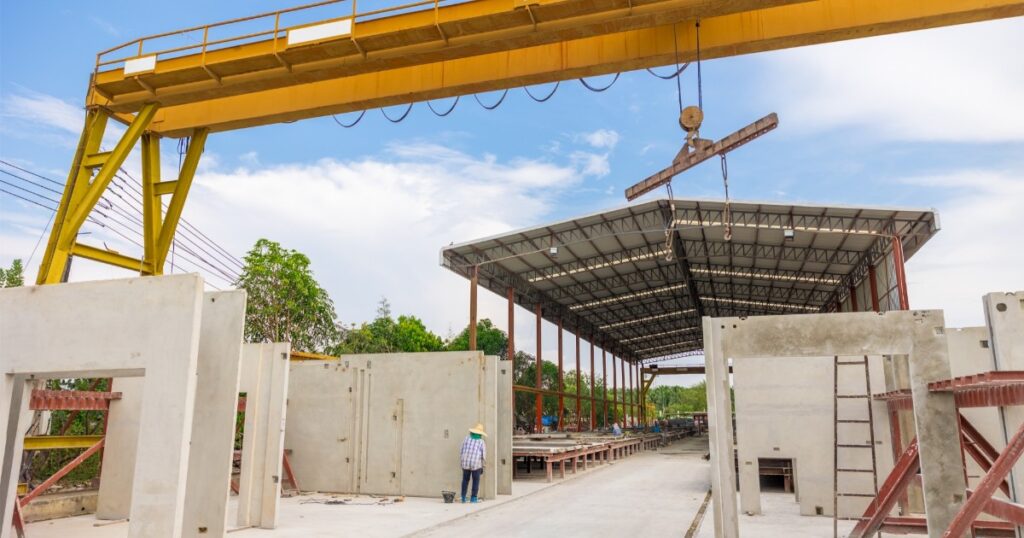
Key Takeaways
- Precast walls provide a controlled, efficient alternative to traditional wall construction.
- They combine strength, design flexibility, and faster installation.
- Proper design and handling ensure long-term durability and performance.
Precast walls give you a fast, consistent, and durable way to build strong structures without the delays of traditional on-site concrete work. They are concrete panels cast in controlled factory conditions, transported to the site, and installed to form either load-bearing or non-load-bearing walls. This method reduces construction time, improves quality control, and minimizes weather-related issues during building.
You can use precast walls for a wide range of projects—from commercial buildings and parking structures to residential developments and retaining walls. Their precision manufacturing allows for various finishes, insulation options, and built-in features like conduits or window openings. While they offer efficiency and long-term performance, you also need to consider transportation limits, design flexibility, and connection details during planning.
Contents
1. Understanding Precast Walls
2. Precast vs. Traditional Brick/Concrete Walls: A Comparison
- Speed and Construction Time
- Cost-Effectiveness and Labor
- Strength and Durability
- Sound and Thermal Insulation
3. How Precast Walls Are Manufactured
4. Advantages of Precast Walls
- Faster Construction and Installation
- Cost Efficiency and Labor Savings
- Durability and High Strength
- Thermal and Sound Insulation
5. Limitations and Considerations
- Initial Investment and Setup Costs
- Transportation and Handling Challenges
- Design Flexibility and Customization
- Connection and Maintenance Issues
6. Applications of Precast Walls
- Commercial Buildings and Warehouses
- Residential and Infrastructure Projects
- Sound Barriers and Specialized Uses
7. Performance Factors and Future Trends
- Sustainability and Environmental Impact
- Innovations in Precast Wall Technology
- Long-Term Performance and Maintenance
Understanding Precast Walls
Precast walls use factory-made concrete panels that deliver consistent quality and faster installation compared to traditional concrete walls. You gain structural reliability, efficient construction sequencing, and long-term durability through controlled production and standardized materials.

Definition and Core Characteristics
Precast walls are concrete wall panels manufactured in a controlled facility, then transported and installed on-site. Unlike cast-in-place concrete, you don’t pour or cure the material at the job site, which reduces weather delays and improves quality control.
These walls can serve as load-bearing, non-load-bearing, or shear walls, depending on your project’s structural needs. Their modular nature allows you to design, produce, and install panels with precise dimensions and surface finishes.
You also benefit from predictable performance. Factory curing ensures uniform strength, lower porosity, and improved resistance to cracking. Precast concrete walls typically exhibit high thermal mass, enhancing energy efficiency by moderating indoor temperature fluctuations.
When properly connected using bolted, welded, or dowel systems, these panels form a stable and continuous structure. The tight manufacturing tolerances and engineered joints help maintain alignment and reduce air or moisture infiltration.
Key Components and Materials
Each precast wall panel consists of cement, aggregates, water, and reinforcement combined in specific proportions. The aggregates—usually sand and crushed stone—contribute to strength and dimensional stability. Cement binds the materials, while controlled water content ensures proper hydration and curing.
Rebar or welded wire mesh provides tensile reinforcement, allowing the wall to resist bending and shear forces. In some designs, insulation layers or vapor barriers are integrated to improve thermal and moisture performance.
Surface finishes vary from smooth steel forms to textured or pigmented surfaces. You can specify finishes that match architectural requirements without compromising structural integrity. The result is a durable, low-maintenance wall system that meets both functional and aesthetic goals.
Precast vs. Traditional Brick/Concrete Walls: A Comparison
Precast walls differ from traditional brick or cast-in-place concrete walls in how they are made, installed, and maintained. You can expect measurable differences in construction speed, long-term cost, structural performance, and insulation efficiency depending on which system you choose.

Speed and Construction Time
Precast walls are manufactured in a controlled facility and delivered ready for installation. This off-site process removes weather delays and reduces on-site labor. You can install large wall panels in days rather than weeks, which shortens project timelines and allows other trades to begin sooner.
Traditional brick or concrete walls require sequential, on-site assembly. Each brick or concrete pour must cure before the next step begins. This process slows progress and increases your exposure to environmental factors like rain or temperature changes.
| Method: Precast | |
|---|---|
| Fabrication | Off-site |
| Installation Time | Fast (days) |
| Site Dependency | Low |
| Method: Traditional | |
|---|---|
| Fabrication | On-site |
| Installation Time | Slow (weeks/months) |
| Site Dependency | High |
For projects with strict schedules or limited access, precast systems provide predictable timing and reduced disruption.
Cost-Effectiveness and Labor
Precast walls often have a higher upfront manufacturing cost but lower total project expenses. Because panels arrive ready to install, you save on skilled labor, scaffolding, and extended site supervision. Shorter construction durations also reduce equipment rental and financing costs.
Traditional walls appear cheaper at first due to simpler materials, but they require more labor hours and site management. Skilled masons must work continuously, and material waste can increase expenses. Over time, maintenance and repair costs also add up.
To evaluate true cost, consider lifecycle value rather than initial price. Precast walls typically deliver better cost predictability and reduced long-term spending.
Strength and Durability
Precast concrete is produced under strict quality control with consistent mix ratios and curing conditions. This environment creates dense, high-strength concrete that resists cracking, moisture, and corrosion. You can rely on it for structural stability in demanding conditions such as industrial or seismic zones.
Traditional brick or poured concrete walls depend heavily on on-site workmanship and curing conditions. Variability in material quality or weather can lead to uneven strength and surface defects. Over time, these walls may require repointing or patching to maintain integrity.
Precast systems also support reinforcement integration, giving them predictable load-bearing capacity and long service life with minimal maintenance.
Sound and Thermal Insulation
Precast walls provide excellent sound and thermal insulation when designed with integrated layers or insulation cores. You can achieve consistent performance because each panel is cast to specification. This helps maintain interior comfort and lowers energy consumption for heating and cooling.
Brick and traditional concrete walls also offer natural thermal mass, but achieving equal insulation often requires additional layers or materials. That increases construction time and cost.
Precast panels can incorporate insulated concrete sandwich designs, combining structural strength with energy efficiency. In noise-sensitive or climate-controlled environments, this design delivers measurable acoustic and thermal benefits with fewer construction steps.
How Precast Walls Are Manufactured
Precast wall manufacturing depends on precision, consistency, and strict quality control. You rely on controlled factory conditions to ensure that each wall panel meets structural, dimensional, and aesthetic requirements before reaching the construction site.

Production Process Overview
You begin by selecting aggregates, cement, water, and admixtures that meet design specifications. Consistent material quality ensures predictable strength and durability. The mix design often includes additives like plasticizers to improve workability while minimizing water content.
Once mixed, the concrete is poured into prepared molds. Embedded rebar or steel mesh provides tensile strength, allowing the panels to handle structural loads. You can also integrate insulation layers or conduits during this stage for energy efficiency and wiring needs.
Curing takes place in a controlled environment to achieve uniform strength. Methods such as steam curing or accelerated curing help maintain production schedules without compromising quality. After curing, panels are demolded, inspected, and stored until shipment.
Formwork and Molding Techniques
Formwork defines the shape, dimensions, and surface finish of each precast wall. You can use steel, timber, or fiberglass molds, depending on the required texture and tolerance. Steel molds provide high accuracy and durability for repetitive production, while flexible materials allow for custom designs or architectural finishes.
Before pouring, you apply a release agent to ensure smooth demolding and reduce surface defects. Inserts or embedded plates can be positioned within the formwork to accommodate future connections or lifting anchors.
Surface finishes are achieved through techniques such as troweling, brushing, or applying textured liners. For decorative panels, you may incorporate pigments or exposed aggregates to achieve specific visual effects. Proper vibration during pouring removes air pockets and enhances surface integrity.
Quality Control and Standards
You must follow strict quality control procedures throughout manufacturing. Material testing verifies the compressive strength of concrete and the tensile strength of reinforcement steel. Dimensional checks confirm that panels conform to design tolerances.
Non-destructive testing methods, such as ultrasonic or rebound hammer testing, help detect internal flaws without damaging the product. Each batch of precast concrete is documented for traceability and compliance with relevant standards such as ASTM or EN codes.
A controlled curing environment, consistent batching, and detailed inspection logs ensure that every precast wall meets performance expectations for structural reliability, durability, and long-term serviceability.
Advantages of Precast Walls
Precast walls provide measurable benefits in speed, cost, and performance. They reduce on-site work, improve quality control, and deliver long-term structural and energy advantages that support both residential and commercial construction.

Faster Construction and Installation
You can accelerate project timelines significantly when using precast concrete walls. Because panels are manufactured off-site in controlled conditions, production can occur simultaneously with site preparation. This parallel process shortens the overall schedule and minimizes weather-related delays.
Installation is straightforward. Precast panels arrive ready to assemble, requiring only lifting, alignment, and connection. This reduces on-site labor and simplifies coordination among trades.
In large projects, the time savings can be substantial. For example, a building that might take months to complete with traditional masonry can often be erected in weeks using precast systems. Faster installation means earlier occupancy and reduced financing costs.
| Process Stage | Traditional Construction | Precast Wall System |
|---|---|---|
| Material Curing | On-site, weather-dependent | Off-site, controlled |
| Assembly Time | Longer | Shorter |
| Labor Demand | High | Moderate |
Cost Efficiency and Labor Savings
Precast walls can lower your total project cost through reduced labor requirements, shorter schedules, and minimal material waste. Although the initial material cost may be higher, the overall savings during construction and over the building’s life often offset that difference.
You spend less on-site labor since panels arrive ready to install. This reduces the number of skilled workers required and shortens the duration of site activity. Lower labor costs also help mitigate risks tied to workforce availability.
The controlled factory environment minimizes waste and rework. Consistent quality reduces the likelihood of costly repairs or adjustments later. When you factor in reduced maintenance and improved energy efficiency, precast systems deliver strong long-term value.
Durability and High Strength
Precast concrete walls are engineered for high strength and long service life. They are cast using precise mix designs and curing methods that produce dense, uniform panels resistant to cracking, corrosion, and weathering.
You gain structural reliability in demanding conditions. Precast walls can withstand heavy loads, seismic forces, and wind pressure better than many conventional materials. Their non-combustible nature also enhances fire resistance, improving building safety.
Because production occurs under controlled conditions, you can expect consistent performance across all units. The result is a structure that requires minimal maintenance and offers predictable durability over decades of use, reducing lifecycle costs.
Thermal and Sound Insulation
Precast walls provide effective thermal mass that stabilizes indoor temperatures. The concrete absorbs heat during the day and releases it at night, reducing heating and cooling demands. This characteristic improves energy efficiency and lowers operating costs.
You also benefit from excellent sound insulation. The dense concrete blocks airborne noise, creating quieter interiors ideal for residential, educational, and commercial buildings.
Additional insulation layers or composite panels can further enhance performance. These systems help you meet modern energy codes while improving occupant comfort. By combining structural strength with acoustic and thermal control, precast walls support both efficiency and livability in a single solution.
Limitations and Considerations
Precast walls offer consistent quality and reduced construction time, but they also involve financial, logistical, and technical factors that influence their practicality. You need to evaluate cost efficiency, transport logistics, design constraints, and long-term performance before committing to this method.

Initial Investment and Setup Costs
You face higher initial investment when adopting precast wall systems. Setting up a precast plant or contracting with a facility requires specialized formwork, molds, and lifting equipment. These costs occur before production begins, unlike traditional cast-in-place methods that rely on on-site labor and simpler tools.
Although labor costs may decrease during installation, the upfront capital for equipment and formwork design can offset those savings. The economic advantage becomes clear only when you produce elements in large quantities or use standardized designs across multiple projects.
For smaller or one-time projects, the return on investment may be limited. You should perform a cost-benefit analysis that compares plant setup, transportation, and assembly expenses against long-term gains in productivity and durability.
| Cost Factor: Formwork and molds | |
|---|---|
| Description | Required for repetitive casting |
| Typical Impact | High upfront cost |
| Cost Factor: Equipment and cranes | |
|---|---|
| Description | Needed for lifting and placement |
| Typical Impact | Moderate to high |
| Cost Factor: Labor savings | |
|---|---|
| Description | Reduced on-site workforce |
| Typical Impact | Long-term benefit |
Transportation and Handling Challenges
Precast walls are heavy structural components, and their size makes transportation a significant logistical challenge. You must plan routes, secure oversized load permits, and ensure proper handling to prevent cracking or chipping during transit.
Transporting panels from the manufacturing facility to the job site often requires flatbed trailers and cranes. These add cost and scheduling complexity, especially for remote or congested urban areas. Weather conditions can further delay delivery or installation.
Handling errors can compromise durability. Even minor impacts can lead to microcracks that reduce service life. To mitigate risk, you should use protective padding, proper rigging techniques, and trained personnel during loading and unloading.
Key consideration: the closer the precast facility is to your site, the lower the transportation cost and risk of damage.
Design Flexibility and Customization
Precast systems follow standardized formwork dimensions, which can restrict architectural creativity. You can specify textures, finishes, and openings, but each variation increases mold complexity and cost. Custom shapes often require new forms, making one-off designs less economical.
Unlike cast-in-place concrete, adjusting dimensions or reconfiguring reinforcement after production is difficult. Once cured, precast elements cannot be easily modified without structural compromise.
To maintain efficiency, you should design within the modular limitations of precast production. Using repetitive layouts and standardized panel sizes supports faster manufacturing, reduces waste, and ensures consistent quality.
Still, advances in digital modeling and 3D printing of molds now allow limited customization without drastically increasing cost. These tools help balance aesthetic goals with production efficiency.
Connection and Maintenance Issues
The performance of precast walls depends heavily on how you connect them. Joints and connections must handle structural loads, temperature changes, and moisture infiltration. Improper sealing or alignment can lead to cracking, corrosion, or reduced durability over time.
You must specify appropriate connection details—such as welded inserts, bolted plates, or grouted joints—based on load transfer requirements. Each connection type demands precision during installation to maintain structural continuity.
Maintenance often focuses on joint inspection and sealant replacement. Because panels are factory-made, the wall surfaces themselves require little upkeep, but connection points can deteriorate faster in harsh climates.
Regular inspection schedules and proper detailing during design minimize long-term maintenance costs. By prioritizing connection quality, you ensure that the durability advantages of precast concrete are fully realized.
Applications of Precast Walls
Precast concrete walls serve a wide range of structural and architectural purposes. You can use them to increase construction speed, improve energy efficiency, and achieve durable performance across commercial, residential, and infrastructure projects. Their controlled manufacturing process ensures consistent quality, making them suitable for both large-scale and specialized applications.

Commercial Buildings and Warehouses
In commercial buildings and warehouses, precast walls deliver fast installation and long-term durability. You can erect large wall panels quickly, reducing on-site labor and minimizing weather-related delays. This efficiency helps maintain predictable schedules, which is critical for projects with tight deadlines.
Precast walls also provide fire resistance and load-bearing capacity, supporting both structural integrity and safety requirements. Many facilities use insulated panels to improve thermal performance, lowering energy costs for heating and cooling.
Architects often prefer precast systems for their design flexibility. You can specify surface finishes, textures, and embedded details that align with corporate or architectural branding. In warehouses, smooth interior finishes simplify maintenance and improve lighting reflectivity, supporting better working conditions and reduced operational costs.
Residential and Infrastructure Projects
You can apply precast walls in residential housing, bridges, and public infrastructure to achieve consistent quality and reduced construction time. For multi-unit housing, precast panels form exterior walls, stairwells, and interior partitions that meet fire and acoustic standards.
In infrastructure, precast systems support retaining walls, tunnels, and bridge abutments. Their factory-controlled production ensures precise dimensions and high compressive strength, reducing the need for on-site adjustments.
Precast insulated walls also enhance energy efficiency in residential buildings. By integrating rigid insulation between concrete layers, you can maintain stable indoor temperatures and reduce thermal bridging. This approach contributes to lower energy consumption and improved occupant comfort without sacrificing structural performance.
Sound Barriers and Specialized Uses
Precast concrete walls function effectively as sound barriers along highways, railways, and industrial zones. The mass and density of concrete absorb and reflect noise, helping you meet local noise control regulations. Panels can be textured or patterned to blend with the surrounding environment while maintaining acoustic performance.
Specialized uses include security walls, data centers, and utility enclosures, where strength and durability are essential. You can also integrate embedded conduits or attachment points during casting, simplifying installation of lighting, signage, or monitoring equipment.
These features make precast systems a reliable choice for environments requiring both acoustic control and structural resilience without extensive on-site modification.
Performance Factors and Future Trends
Precast concrete walls continue to evolve through improvements in material composition, production methods, and design integration. You benefit from systems that balance durability, energy efficiency, and cost efficiency, supported by sustainable practices and ongoing technological innovation.

Sustainability and Environmental Impact
You can reduce the environmental footprint of your projects by selecting precast systems designed for resource efficiency. Manufacturers often use recycled aggregates, low-carbon cement, and optimized mix designs to lower embodied carbon. Controlled factory production minimizes material waste and water use compared to on-site casting.
Thermal mass in precast concrete enhances energy performance by stabilizing indoor temperatures. This reduces heating and cooling demands, particularly in climates with wide temperature variation.
Many producers now implement Environmental Product Declarations (EPDs) and Life Cycle Assessments (LCAs) to quantify environmental performance. These tools help you make informed design choices that align with green building standards such as LEED or BREEAM.
Innovations in Precast Wall Technology
You gain from advances that improve precision, speed, and adaptability. 3D modeling and BIM integration allow seamless coordination between design, manufacturing, and installation phases. This reduces construction errors and shortens project timelines.
New high-performance concrete (HPC) formulations increase strength and reduce permeability, improving long-term durability. Self-compacting concrete (SCC) ensures uniform density and surface finish without vibration.
Emerging embedded sensor systems enable real-time monitoring of temperature, moisture, and load conditions within panels. Combined with automation and robotics in production, these technologies enhance quality control and repeatability. The result is a consistent product that improves both performance and cost efficiency.
Long-Term Performance and Maintenance
Precast walls typically offer service lives exceeding 50 years with minimal maintenance when properly designed and installed. You can expect strong resistance to weathering, corrosion, and mechanical stress due to dense, factory-cured concrete.
Routine inspection focuses on joint integrity, sealant condition, and connection hardware. Preventive maintenance, such as resealing or cleaning, extends structural life and maintains energy efficiency.
Because panels are modular and replaceable, you can repair or upgrade sections without major disruption. This adaptability supports lifecycle cost savings and aligns with sustainable asset management practices.