
 EN
EN TH
TH CN
CN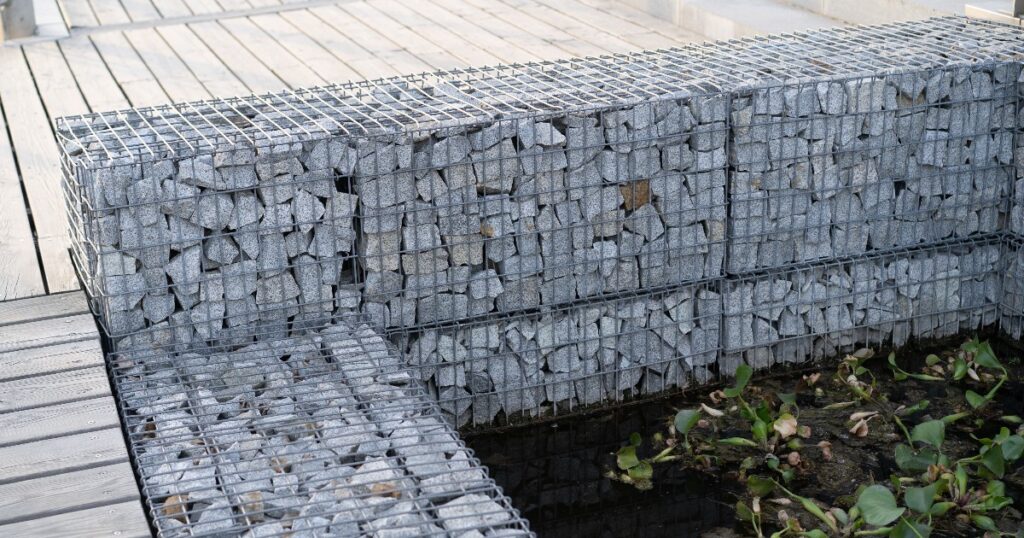
Key Takeaways
- Gabion boxes offer a flexible and durable solution for retaining and erosion control structures.
- Proper design and material selection ensure structural integrity and long service life.
- Effective installation and maintenance practices improve performance and reduce long-term costs.
Gabion boxes give you a practical way to build retaining walls and manage erosion without relying on rigid concrete systems. Made from double-twisted steel wire mesh filled with stone, these modular units create flexible, permeable, and durable structures that adapt to ground movement and drainage conditions. You can use gabion boxes to achieve structural stability, effective erosion control, and long-term performance in a wide range of site conditions.
When you design and install gabion systems correctly, you gain a balance between strength and sustainability. Their open structure allows water to pass through, reducing hydrostatic pressure and preventing failure common in solid wall designs. You also have the advantage of using locally sourced stone, which lowers material costs and blends naturally with surrounding landscapes.
Choosing the right wire coating, stone size, and installation method ensures your gabion wall meets both engineering and environmental standards. Whether you’re stabilizing a slope, reinforcing a channel, or constructing a mass gravity wall, understanding the specifications and design principles behind gabion boxes sets the foundation for a reliable and efficient project.
Contents
2. Design Principles for Retaining Walls
3. Erosion Control Applications
- Slope Protection Techniques
- Riverbank and Shoreline Stabilization
- Integrating Vegetation with Gabion Systems
4. Installation Best Practices
5. Technical Specifications and Materials
6. Maintenance and Longevity of Gabion Structures
Understanding Gabion Boxes
Gabion systems use modular wire containers filled with stone or similar materials to create stable, load-bearing structures. These units provide structural integrity for retaining walls, slope stabilization, and erosion control while offering flexibility and permeability not found in rigid concrete systems.

What Are Gabion Boxes
A gabion box is a rectangular or cubic wire mesh container designed to hold rock, concrete fragments, or other durable fill. You typically assemble these cages on-site and secure them with lacing wire or fasteners before filling.
The mesh is made from galvanized steel, PVC-coated wire, or stainless steel, depending on site conditions. The wire diameter and mesh size vary according to design requirements and load capacity.
Gabions function as gravity structures, relying on the mass of the stone fill to resist pressure from soil or water. Their open structure allows drainage, reducing hydrostatic pressure behind retaining walls.
You can connect multiple gabion boxes in series or stack them to form walls, embankments, or protective barriers. This modularity allows efficient adaptation to irregular terrain and simplified maintenance.
Types of Gabion Structures
Gabion systems come in several configurations, each suited to a specific engineering purpose. The most common types include:
| Type: Gabion Baskets | |
|---|---|
| Description | Rectangular mesh boxes filled with stone |
| Typical Use | Retaining walls, slope stabilization |
| Type: Gabion Mattresses | |
|---|---|
| Description | Shallow, wide units |
| Typical Use | Riverbanks, scour protection |
| Type: Gabion Sacks | |
|---|---|
| Description | Cylindrical wire units |
| Typical Use | Temporary works, emergency repairs |
| Type: Welded Mesh Gabions | |
|---|---|
| Description | Rigid panels joined at edges |
| Typical Use | Architectural and landscape applications |
You select the type based on hydraulic conditions, load requirements, and aesthetic goals. For example, woven mesh gabions perform well in flexible applications, while welded mesh provides a cleaner appearance for visible structures.
Benefits of Gabion Solutions
Gabions offer several engineering and environmental advantages. Their permeability prevents water buildup, reducing the need for separate drainage systems. The voids between stones promote vegetation growth, improving site integration and ecological performance.
You gain cost efficiency because gabions require minimal foundation preparation and use locally available fill materials. Their modular design simplifies transport and assembly, lowering labor costs.
In long-term use, gabions resist deformation, tolerate ground movement, and require limited maintenance. When properly designed and installed, they provide a durable, adaptable, and sustainable solution for retaining and erosion control applications.
Design Principles for Retaining Walls
Designing an effective gabion retaining wall requires attention to geometry, soil behavior, and material stability. You must ensure that the wall’s structure, foundation, and load capacity work together to resist sliding, overturning, and settlement under long-term environmental conditions.
Structural Considerations
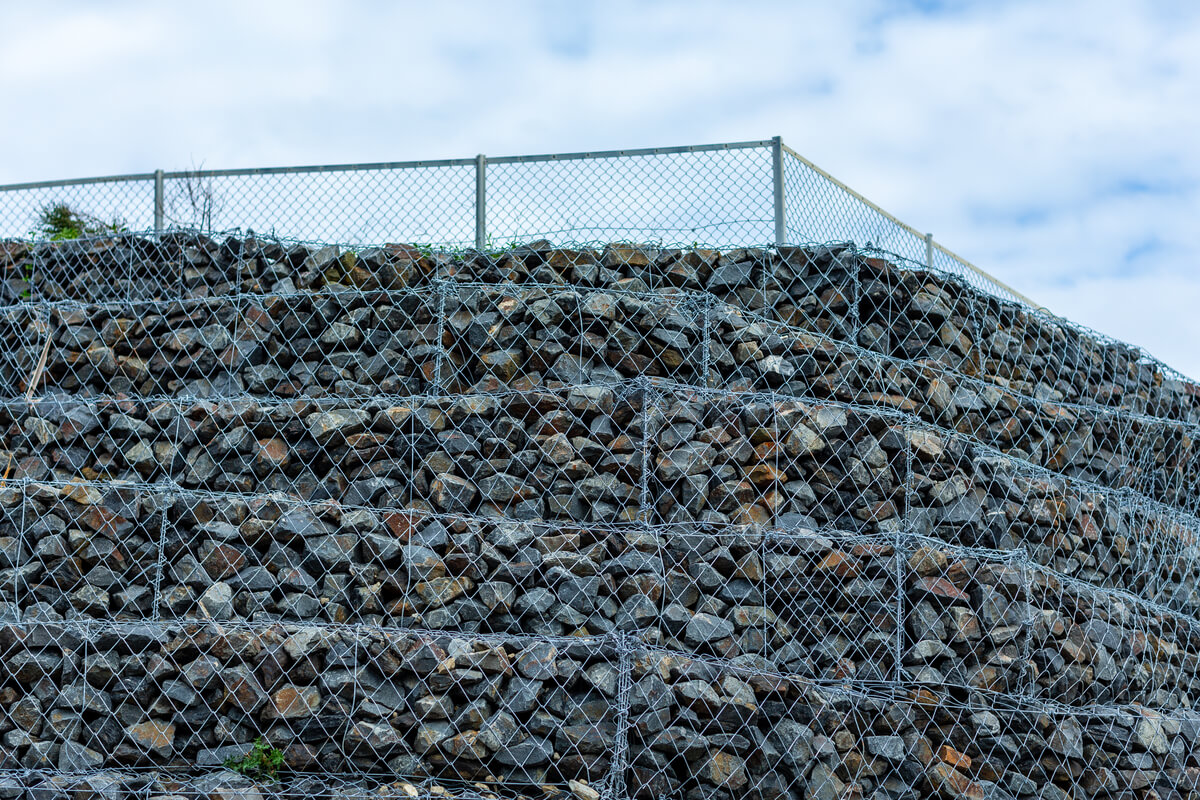
Gabion retaining walls act as gravity structures, relying on their mass to resist lateral earth pressures. You should design the wall with a base width typically between one-half and two-thirds of the wall height, depending on soil type and stability analysis results.
Use angular rock fill with a specific gravity of at least 2.5 to ensure interlock and minimize void movement. The rock size usually ranges from 3 to 8 inches, depending on the mesh opening.
A batter angle of 5–6 degrees toward the retained soil improves resistance to sliding. For higher walls, you may step the face backward or use multiple gabion tiers to distribute loads evenly.
Include non-woven geotextile fabric between the gabions and backfill to prevent soil loss while allowing drainage. This reduces hydrostatic pressure and maintains wall integrity over time.
Foundation Preparation
A stable foundation is essential for long-term wall performance. Begin by grading the subsoil to a uniform level and compacting it to the required density. Where bearing capacity is low, place a granular base layer—typically 6 to 18 inches deep—using well-graded stone ranging from ½ to 1½ inches in size.
You may need to embed the first gabion course halfway below grade to increase sliding resistance. Proper alignment and compaction of this base course are critical because it supports the full wall load.
Ensure adequate drainage behind the wall using filter fabric or perforated pipe systems. Poor drainage can cause water buildup, leading to wall displacement or settlement.
Load-Bearing Requirements
You must design the gabion wall to resist earth pressure, surcharge loads, and hydrostatic forces. Perform stability checks against overturning, sliding, and bearing failure using standard geotechnical methods such as limit equilibrium analysis.
The unit weight of the rock fill and specific gravity of the fill material directly affect load-bearing capacity. Typical values range from 150 to 170 lb/ft³ for dense stone such as granite or basalt.
For walls exceeding 18 feet, consider stepped configurations or reinforced soil sections to maintain safety factors. Always verify design assumptions with a qualified geotechnical engineer and adjust dimensions to local soil and drainage conditions.
Erosion Control Applications
Gabions provide structural stability where soil movement and water flow threaten land integrity. Their modular, permeable design allows you to manage erosion efficiently while maintaining natural drainage and supporting long-term site durability.

Slope Protection Techniques
You can use gabion baskets to stabilize slopes that are prone to soil displacement or surface runoff. When placed in stepped or terraced arrangements, they act as gravity walls that resist sliding and reduce surface erosion.
The open mesh design allows water to pass through while retaining soil behind the structure. This reduces hydrostatic pressure and prevents slope failure during heavy rainfall.
For steep or unstable slopes, combine gabion retaining walls with geotextiles to separate fine soil particles from rock fill. This configuration improves filtration and prevents clogging.
| Technique: Terraced gabion walls | |
|---|---|
| Purpose | Reduce slope angle |
| Typical Installation | Layered along contour lines |
| Technique: Toe protection | |
|---|---|
| Purpose | Prevent undercutting |
| Typical Installation | Base of slope or embankment |
| Technique: Gabion mattresses | |
|---|---|
| Purpose | Control surface runoff |
| Typical Installation | Laid flat on slope face |
Regular inspection and maintenance help ensure long-term performance, especially in areas with variable moisture or freeze-thaw cycles.
Riverbank and Shoreline Stabilization
Along rivers, creeks, and coastlines, gabions serve as revetments that absorb and dissipate hydraulic energy. Their flexibility allows them to conform to ground movement without cracking, making them suitable for dynamic water environments.
You can install gabion walls or mattresses parallel to the water flow to protect banks from scouring. The voids between stones slow water velocity and trap sediment, promoting natural bank rebuilding over time.
In coastal areas, gabions act as low-profile breakwaters that reduce wave impact and protect shorelines from progressive erosion. Using durable coatings such as galvanized or PVC-coated wire extends service life in saline or abrasive conditions.
Proper foundation preparation—such as compacting the subgrade and anchoring the structure—is essential to prevent displacement during high-flow events.
Integrating Vegetation with Gabion Systems
Combining vegetation with gabion structures improves both structural and ecological performance. You can plant native grasses or shrubs in the gaps between stones, allowing roots to bind the soil and further stabilize the surface.
Vegetated gabions help reduce surface runoff velocity and improve water infiltration. Over time, plant growth softens the visual appearance of the wire mesh and enhances habitat value.
When designing these systems, select species with deep root systems and tolerance for local moisture conditions. A mix of grasses and woody plants often provides the best reinforcement.
Maintenance involves periodic trimming and monitoring plant health to prevent root overgrowth from displacing the rock fill. This integrated approach supports erosion control while maintaining a natural landscape character.
Installation Best Practices
Proper installation ensures that gabions perform as intended for structural stability and long-term erosion control. Success depends on accurate site preparation, correct assembly, and controlled filling to maintain alignment and prevent deformation under load.

Site Assessment and Planning
Begin by surveying the site to identify soil type, bearing capacity, and drainage patterns. You must confirm that the foundation is level, compacted, and free from organic material or soft spots that could cause settlement.
Establish the wall line using stakes and string, maintaining consistent elevation. Where necessary, install a geotextile filter behind or beneath the gabions to reduce soil migration and improve drainage.
Document design parameters such as wall height, batter angle, and basket dimensions. Verify that materials meet specifications under BS EN 1997-1:2004 or BS 8002:2015, ensuring compatibility between wire coating, mesh size, and fill stone.
Assembly and Placement Procedures
Unfold each gabion on a flat surface and straighten any bends before connecting panels. Use lacing wire or helical binders to secure edges at 100 mm intervals, maintaining uniform tension along joints.
Position empty gabions on the prepared foundation, aligning them tightly side by side. Anchor the first row using stakes or temporary bracing to prevent movement during filling. For multi-tiered structures, offset vertical joints in a running bond pattern to distribute loads evenly.
Connect adjacent units with binding wire along vertical and horizontal edges. When stacking, tie the upper gabion to the one below at all corners to maintain structural continuity. Check that all faces remain level and square before proceeding to filling.
Filling and Compaction Methods
Select durable, angular stone with a nominal size of 125–200 mm, ensuring no piece is smaller than the mesh opening. Place stones by hand or with machinery to minimize voids and achieve a dense, interlocked structure.
Fill each gabion in layers of roughly one-third its height. After each layer, install internal bracing wires to prevent bulging. Adjust visible faces with hand-set stones for a uniform appearance.
Finish slightly above the top edge (about 25–50 mm) to account for settlement. Close the lid securely with lacing wire, applying even tension to prevent gaps or deformation under load.
Technical Specifications and Materials
You need to understand the structural integrity of gabions depends on the wire mesh quality, the type of rock fill, and strict adherence to inspection standards. Each component must meet precise engineering and material specifications to ensure durability, stability, and long-term performance in retaining wall and erosion control applications.

Wire Mesh and Coating Standards
Gabion baskets use double-twisted hexagonal or welded wire mesh to prevent unraveling and maintain structural integrity. The wire typically conforms to EN 10223-3, ASTM A641, or BS 1052 standards. These standards define tensile strength, coating thickness, and dimensional tolerances.
The wire diameter usually ranges from 2.7 mm to 3.9 mm depending on design loads. Heavier gauges are used for base layers or high-stress zones. The mesh openings, often 80 × 100 mm or 100 × 120 mm, allow proper interlocking of rock fill while maintaining flexibility.
Coating protects the steel from corrosion. Common coatings include zinc (galvanized), Zn-Al (Galfan), or PVC/PE polymer. For marine or high-salinity environments, you should specify a Zn-Al alloy with PVC coating for maximum resistance. The coating thickness must meet the project’s exposure class and service life requirements.
| Property: Wire Diameter | |
|---|---|
| Typical Range | 2.7–3.9 mm |
| Standard Reference | EN 10223-3 / ASTM A641 |
| Property: Mesh Opening | |
|---|---|
| Typical Range | 80×100 mm |
| Standard Reference | BS 1052 |
| Property: Tensile Strength | |
|---|---|
| Typical Range | 350–550 MPa |
| Standard Reference | ASTM A641 |
| Property: Coating Type | |
|---|---|
| Typical Range | Zn, Zn-Al, PVC |
| Standard Reference | EN 10244-2 |
Rock Fill Requirements
The fill material provides mass and drainage capacity. You must use hard, durable, and angular rock that resists weathering and degradation. Suitable rock types include granite, basalt, or limestone with a minimum density of 2.6 t/m³.
Each stone should be large enough to prevent loss through the mesh openings. A general rule is that the minimum stone size should exceed 1.5 times the mesh aperture. For example, with an 80×100 mm mesh, use rock between 100 mm and 200 mm.
Avoid using rounded river stones or friable material. Angular rock ensures interlock and reduces settlement. The gradation should be well distributed to minimize voids while maintaining permeability.
Before installation, inspect the rock for cracks, clay coatings, or organic matter. Clean materials improve bonding and reduce long-term maintenance issues.
Quality Control and Inspection
Quality assurance begins with verifying that all gabion components meet specified standards before assembly. You should check wire tensile strength, coating thickness, and mesh dimensions using calibrated gauges and test certificates from the manufacturer.
During installation, confirm that baskets are properly aligned, securely laced, and filled evenly. The fill should be compacted by hand or light tamping to prevent voids. Overfilling slightly before closure compensates for minor settlement.
Periodic inspection ensures long-term stability. Inspect for corrosion, deformation, or stone displacement after heavy rainfall or flooding. Replace damaged panels or re-lace loose joints promptly.
Maintain detailed records of material certifications, inspection logs, and test results. Proper documentation provides traceability and supports compliance with engineering and environmental requirements.
Maintenance and Longevity of Gabion Structures
Proper upkeep of gabion structures preserves their strength, appearance, and service life. Regular inspection, timely repairs, and preventive measures against corrosion and deformation reduce long-term costs and structural failures.

Inspection and Repair Protocols
You should inspect gabions at least once a year and after major weather events. Look for wire corrosion, mesh deformation, bulging, settlement, and stone displacement. Early detection prevents small issues from developing into structural problems.
Document findings using a checklist that includes:
| Inspection Item: Wire Mesh | |
|---|---|
| Condition to Check | Rust, coating loss |
| Action Required | Replace or recoat |
| Inspection Item: Alignment | |
|---|---|
| Condition to Check | Bulging, leaning |
| Action Required | Repack stones, re-tension mesh |
| Inspection Item: Drainage | |
|---|---|
| Condition to Check | Blockages, sediment |
| Action Required | Clear and restore flow |
Repair damaged sections immediately. Replace corroded mesh panels with galvanized or PVC-coated wire to match the original specification. When reassembling, maintain proper stone packing to restore stability and prevent voids that accelerate movement.
Addressing Common Failures
Common failures include corrosion, settlement, and hydraulic scouring. Corrosion often starts where water flow or soil chemistry is aggressive. You can reduce this risk by using double-twisted galvanized or PVC-coated mesh and ensuring adequate drainage behind the wall.
Settlement occurs when the foundation or backfill is poorly compacted. To correct it, remove affected gabion units, recompact the base, and reinstall with proper alignment. Avoid overloading the face with additional material that can distort the cage structure.
Hydraulic scouring near waterways undermines the toe of the wall. Install riprap or extend the gabion apron to protect the base. Regularly monitor water levels and adjust the protection zone as conditions change.
Extending Service Life
Material quality and installation precision largely determine how long your gabions last. Well-built systems using galvanized or PVC-coated wire can perform for 20–120 years, depending on environmental exposure.
To extend service life, maintain effective drainage to reduce hydrostatic pressure and corrosion. Use geotextile filters in contact with fine soils or acidic conditions to separate materials and control seepage.
Apply protective coatings or sacrificial anodes in marine or high-salinity environments. Schedule periodic maintenance to tighten mesh connections, replace eroded fill stones, and remove vegetation that may displace the structure.