
 EN
EN TH
TH CN
CN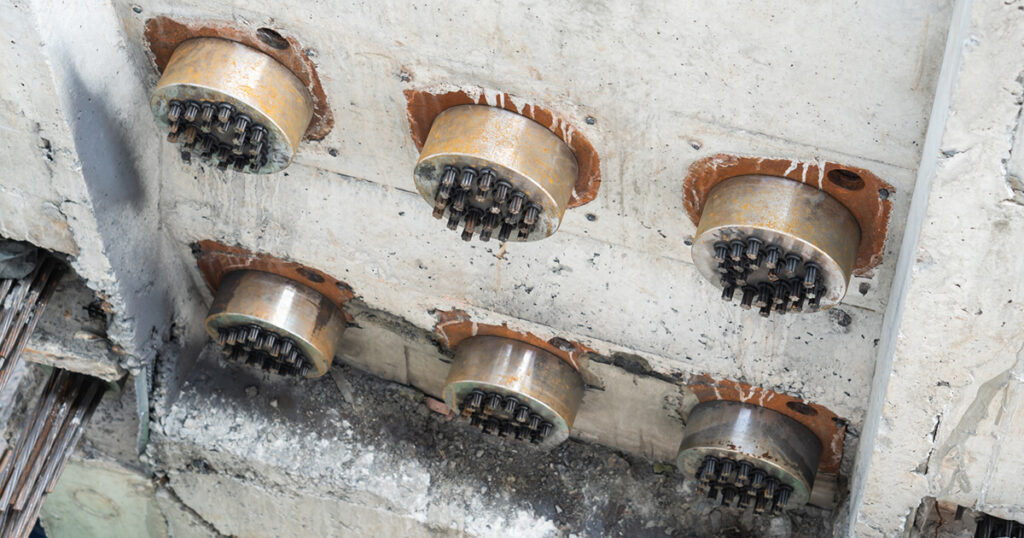
Key Takeaways
- Learn how post-tension slabs improve strength and reduce material use.
- Understand the essential components and construction process.
- Discover where post-tension slabs offer the greatest performance advantages.
Post-tension slabs play a critical role in modern construction, allowing you to build stronger, longer-spanning, and more efficient concrete structures. By tensioning high-strength steel tendons within the concrete, these slabs reduce cracking, minimize deflection, and optimize material use. You gain a structural system that delivers durability, flexibility, and cost-efficiency across residential, commercial, and infrastructure projects.
You encounter post-tension slabs in high-rise buildings, parking structures, bridges, and even residential foundations where soil movement is a concern. Their ability to handle heavy loads and maintain structural integrity makes them a reliable choice when performance and longevity matter most. Understanding how they work and how to install them correctly ensures you achieve a stable and lasting result.
Contents
1. Fundamentals of Post-Tension Slabs
- What Is a Post-Tension Slab?
- How Post-Tensioning Works
- Key Differences from Traditional Concrete Slabs
2. Core Components and Materials
3. Construction Process of Post-Tension Slabs
- Design and Planning
- Tendon Placement and Concrete Pouring
- Tensioning Process and Hydraulic Jacks
- Curing and Grouting Procedures
4. Benefits and Performance Advantages
- Enhanced Strength and Durability
- Design Flexibility and Longer Spans
- Crack Prevention and Structural Integrity
- Cost-Effectiveness and Maintenance
5. Applications and Maintenance Considerations
- Residential and Commercial Buildings
- Parking Structures and High-Rise Buildings
- Bridges and Infrastructure Projects
- Inspection, Re-Tensioning, and Long-Term Care
Fundamentals of Post-Tension Slabs
Post-tensioned slabs rely on high-strength steel tendons to improve the load-bearing capacity and durability of concrete structures. This method enhances structural performance by applying controlled compressive forces that counteract tensile stresses, allowing thinner slabs, longer spans, and reduced cracking compared to conventional reinforced concrete.

What Is a Post-Tension Slab
A post-tension slab is a type of prestressed concrete slab that uses high-strength steel cables or tendons to strengthen the concrete after it has hardened. You’ll find this system in both commercial and residential construction where large spans or heavy loads are required.
Unlike standard reinforced concrete, which relies solely on embedded rebar, post-tensioning introduces active forces into the structure. The process creates a slab that can resist bending and cracking more effectively under service loads.
These slabs are often used for parking structures, bridges, and multi-story buildings. Their design allows for thinner sections and fewer support columns, improving usable floor space. The result is a more efficient and economical structural system that maintains long-term durability.
| Component: Concrete Slab | |
|---|---|
| Description | Provides compressive strength and base for the structure |
| Component: Tendons / Cables | |
|---|---|
| Description | High-strength steel elements that are tensioned after curing |
| Component: Anchorage System | |
|---|---|
| Description | Transfers the tensioned force into the concrete |
How Post-Tensioning Works
In post-tensioning, you first place steel tendons inside ducts within the formwork before pouring the concrete. Once the concrete slab reaches its design strength, you apply tension to the tendons using hydraulic jacks.
This process stretches the tendons and introduces compressive forces into the concrete. These forces counteract the tensile stresses that develop under load, reducing the risk of cracking and deflection.
The tensioned tendons are then anchored at the slab ends, locking in the stress. This creates a prestressed concrete system that remains in compression even when subjected to external loads. Proper tensioning levels and anchorage alignment are essential to prevent loss of prestress and ensure long-term stability.
Key Differences from Traditional Concrete Slabs
Traditional reinforced concrete slabs depend on passive steel reinforcement bars to handle tension after cracks form. In contrast, post-tensioned slabs apply prestress before substantial cracking occurs, keeping the concrete largely in compression.
You can design a post-tension slab to span longer distances with less thickness than a conventional slab. This reduces material usage and weight while maintaining structural strength.
Another major difference lies in performance under service conditions. Post-tensioned systems exhibit smaller deflections, improved crack control, and better fatigue resistance. They also allow more flexibility in architectural design, since fewer intermediate supports are needed.
By integrating prestressing steel and controlled compressive forces, you achieve a more efficient and durable structural solution than standard reinforced concrete.
Core Components and Materials
Post-tension slabs rely on a coordinated system of steel tendons, ducts, anchorages, grout, and formwork. Each element performs a specific structural function that ensures the slab achieves the required strength, serviceability, and long-term durability under load.
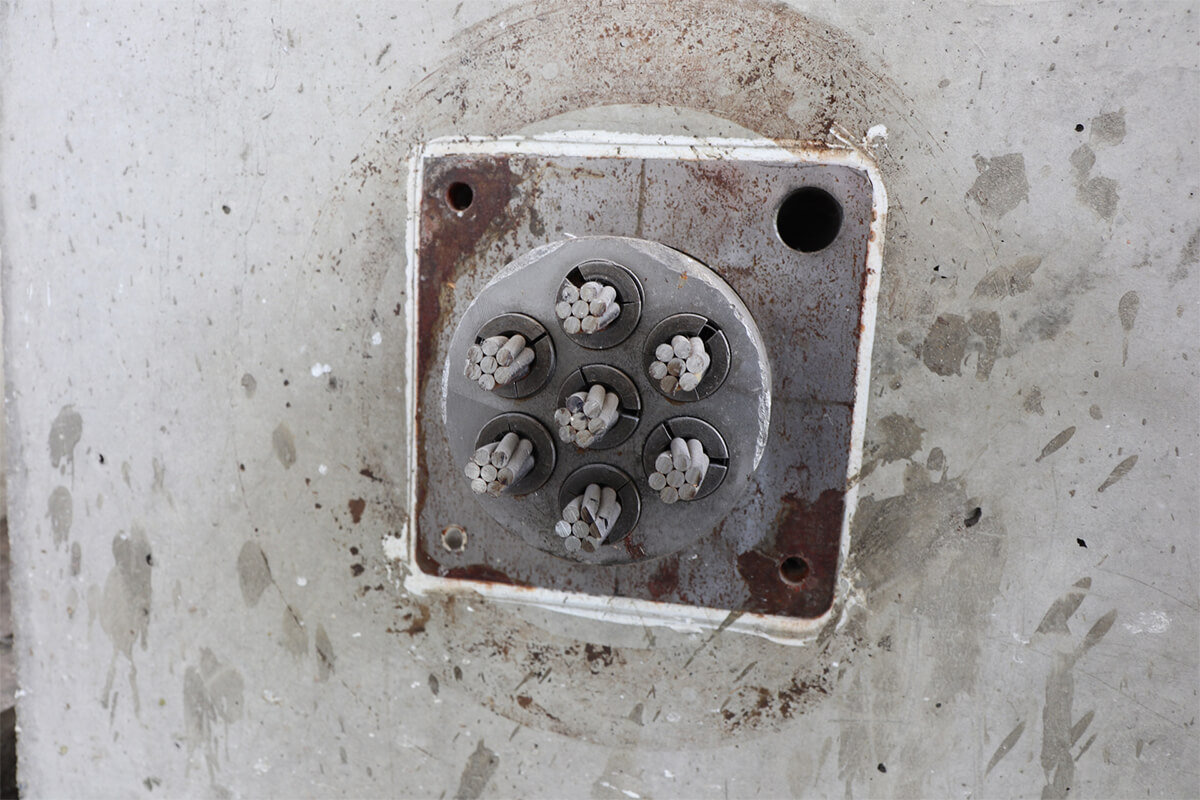
Steel Tendons and Ducts
You use high-tensile steel tendons—also called prestressing steel strands—to create the internal tension that strengthens the slab. These tendons are typically 7-wire strands conforming to ASTM A416 or similar standards, providing high strength and controlled elongation.
Tendons are placed within steel or plastic ducts that prevent direct bonding with the concrete before tensioning. The ducts guide the tendons along a designed profile, often parabolic, to counteract expected bending moments.
Proper duct alignment and support are essential. Misaligned ducts can cause uneven stress distribution or hinder tensioning operations. You should ensure ducts are securely fixed to reinforcement and adequately sealed to prevent concrete ingress during pouring.
After tensioning, ducts may remain unbonded or be filled with grout depending on the design type—unbonded systems use greased and sheathed tendons, while bonded systems rely on grouted ducts for load transfer.
Anchors and Anchorages
Anchors and anchorages secure the tendons at slab ends and maintain the applied prestress. They consist of wedges, bearing plates, and housings designed to grip and hold the prestressing steel once tension is applied.
You install anchorages at both live and dead ends. The live end allows tensioning using hydraulic jacks, while the dead end holds the tendon permanently after stressing. Each anchorage must transmit large concentrated forces into the surrounding concrete without causing cracking or spalling.
Anchor plates are typically made from high-strength steel and embedded in thickened slab zones or localized reinforcement cages. You should verify that the bearing area and reinforcement layout meet design codes to prevent local failure.
Routine inspection of anchor seating and wedge engagement is critical. Improper seating can result in tendon slippage or loss of prestress, reducing slab performance and durability.
Grouting and Grout
Grouting protects tendons from corrosion and, in bonded systems, ensures load transfer between steel and concrete. You typically use a cementitious grout with low shrinkage, high fluidity, and minimal bleed.
Before grouting, ducts must be clean and free of debris or moisture. You inject grout under pressure from one end until it flows from the opposite vent, confirming complete filling. Continuous monitoring of pressure and flow helps prevent voids.
A typical grout mix includes cement, water, and approved admixtures such as plasticizers or corrosion inhibitors. The table below summarizes key properties:
| Property: Flowability | |
|---|---|
| Requirement | High |
| Purpose | Ensures full duct filling |
| Property: Bleeding | |
|---|---|
| Requirement | <0.3% |
| Purpose | Prevents voids |
| Property: Compressive Strength | |
|---|---|
| Requirement | >30 MPa |
| Purpose | Provides structural bond |
| Property: Volume Change | |
|---|---|
| Requirement | Minimal |
| Purpose | Maintains prestress integrity |
Proper curing of grout ensures long-term protection and structural performance.
Formwork and Reinforcement
Formwork shapes and supports the slab during concrete placement and curing. You must use rigid, well-aligned formwork capable of withstanding vibration and pressure without deformation. Accurate leveling ensures uniform slab thickness and tendon alignment.
Reinforcement complements the post-tension system. Conventional bars control shrinkage and temperature cracking, while additional reinforcement may be required around openings, edges, and anchor zones.
You should coordinate the placement of reinforcement and ducts to prevent interference. Clear spacing allows proper concrete consolidation and vibration.
Quality control of formwork, reinforcement, and embedded components directly affects slab performance. Any deviation in geometry or alignment can compromise tendon efficiency and structural integrity.
Construction Process of Post-Tension Slabs
You build a post-tension slab through a sequence of controlled operations that ensure strength, stability, and long-term performance. Each stage—from structural design to final grouting—requires precision, quality materials, and adherence to engineering specifications to achieve the desired load-bearing capacity and crack resistance.

Design and Planning
You begin by developing a structural design that defines slab thickness, tendon layout, and concrete strength. Engineers calculate load paths, deflection limits, and tendon stresses according to design codes such as ACI or Eurocode 2.
A detailed tendon layout drawing identifies cable spacing, anchorage zones, and stressing ends. Coordination between the structural and architectural teams ensures that openings, service conduits, and reinforcement do not interfere with tendon paths.
During planning, you also determine concrete mix specifications, typically targeting a compressive strength of 4,000–5,000 psi. This design phase sets the foundation for efficient construction sequencing, reducing rework and ensuring that post-tensioning forces act as intended once the slab is stressed.
Tendon Placement and Concrete Pouring
Once the formwork and reinforcement are in place, you install the post-tension tendons. These consist of high-strength steel strands housed within plastic or metal ducts. Spacers and chairs maintain correct tendon elevation to ensure uniform stress distribution.
Before concreting, verify that all ducts are clean, secured, and free of kinks. Mark anchorage points clearly to prevent misalignment during stressing.
During concrete pouring, use a mix with controlled workability and low water-to-cement ratio. Employ internal vibrators to remove air pockets and achieve full consolidation around the ducts. Maintain consistent placement rates to avoid cold joints. Proper concreting practices directly affect tendon bond quality and long-term slab performance.
Tensioning Process and Hydraulic Jacks
After the concrete reaches the specified minimum strength, typically 70–80% of design compressive strength, you begin the tensioning stage. Hydraulic jacks apply controlled force to each tendon, stretching the steel strands to a predetermined stress level—often around 33,000 psi.
Each jack is calibrated to ensure uniform force application. You record elongation measurements for every tendon to confirm that tensioning meets design requirements.
Anchorage wedges lock the tendons in place once the desired elongation is achieved. This process introduces compressive pre-stress into the slab, counteracting tensile stresses from service loads and minimizing cracking under use.
Curing and Grouting Procedures
Proper curing maintains moisture and temperature conditions for concrete strength development. You can use wet coverings, curing compounds, or continuous water spray for at least seven days, depending on environmental conditions.
Once the tensioning is complete and the concrete has stabilized, grout the tendon ducts. The grout—typically a cementitious mixture—fills voids, protects steel from corrosion, and bonds the tendons to the surrounding concrete.
Grouting is performed under pressure to ensure complete filling. Monitor flow and vent outlets to confirm no air pockets remain. Adequate curing and grouting practices ensure the long-term durability and structural integrity of post-tension slabs used in modern construction projects.
Benefits and Performance Advantages
Post-tension slabs deliver measurable improvements in strength, durability, and design efficiency. They allow you to optimize material usage while achieving longer spans, fewer joints, and reduced maintenance demands throughout a structure’s service life.

Enhanced Strength and Durability
You gain higher load-bearing capacity because post-tensioning compresses the concrete, allowing it to resist tensile stresses more effectively. This process increases both strength and enhanced durability, making the slab suitable for heavy loads and high-traffic environments.
By reducing internal stresses, you extend the service life of the structure. The pre-compression minimizes deflection and fatigue, which helps maintain consistent performance under varying loads.
Post-tension slabs also perform well in harsh conditions. Their reduced permeability limits moisture penetration and corrosion of embedded steel, improving long-term reliability and minimizing deterioration.
Design Flexibility and Longer Spans
Post-tensioning gives you significant design flexibility. You can create longer spans and thinner slabs without compromising safety or stiffness. This allows for open floor layouts with fewer columns, which improves usable space and architectural freedom.
In high-rise or commercial projects, this flexibility supports efficient integration of mechanical and electrical systems. It also helps reduce the overall building height by minimizing slab thickness while maintaining required strength.
You can adapt tendon layouts to meet specific loading or architectural requirements. This adaptability enables efficient use of materials and supports customized structural solutions for complex designs.
Crack Prevention and Structural Integrity
The applied tension in tendons keeps the concrete in compression, which helps prevent cracking even under service loads. By controlling tensile stresses, you maintain structural integrity and reduce the likelihood of water ingress or corrosion.
Crack control also improves appearance and reduces the need for surface repairs. The slab remains more uniform, which enhances performance in both exposed and interior applications.
Properly tensioned slabs maintain tight joints and consistent alignment. This stability supports long-term durability and reliable behavior under repeated loading and environmental changes.
Cost-Effectiveness and Maintenance
Post-tension slabs deliver cost-effectiveness through material savings and reduced labor. Thinner sections require less concrete and reinforcement, lowering initial construction costs.
You also save on maintenance costs because the structure experiences fewer cracks and less deterioration over time. The reduced need for repairs or resurfacing contributes to lower lifecycle expenses.
Fewer columns and lighter slabs can shorten construction schedules and simplify formwork. These efficiencies make post-tension systems an economical choice for projects requiring durability, performance, and open spaces without sacrificing quality.
Applications and Maintenance Considerations
Post-tensioned slabs serve critical roles in structural engineering, providing efficient load distribution, reduced material use, and enhanced durability. Their long-term performance depends on proper design, installation, and consistent maintenance practices that preserve tension levels and structural integrity.

Residential and Commercial Buildings
You can apply post-tension slabs in residential and commercial buildings to achieve thinner floor systems and longer spans between supports. These slabs reduce the amount of concrete and reinforcing steel required, lowering both material costs and building weight.
In residential construction, especially on shrink-swell soils, post-tensioned slabs-on-ground help resist soil movement by maintaining internal compressive stresses. This minimizes cracking and differential settlement, improving the service life of foundations.
For commercial projects, such as offices or retail spaces, post-tensioning allows flexible layouts with fewer columns. It supports open floor plans and accommodates mechanical and electrical systems more efficiently than conventional reinforced slabs.
| Benefit: Reduced cracking | |
|---|---|
| Application | Residential foundations |
| Benefit: Longer spans | |
|---|---|
| Application | Commercial floors |
| Benefit: Lower material use | |
|---|---|
| Application | Multi-story buildings |
Parking Structures and High-Rise Buildings
You benefit from post-tension slabs in parking structures and high-rise buildings due to their ability to handle heavy loads and repetitive stress. The system’s strength enables thinner slabs and longer spans, which reduce the number of beams and columns while maintaining structural capacity.
In parking structures, the reduced slab thickness lowers the total building height and foundation load. The design also improves drainage slopes and surface durability under vehicle traffic.
For high-rise buildings, post-tensioning allows faster floor cycles and reduced floor-to-floor heights. It also enhances seismic performance by reducing overall mass and improving ductility. The result is a more efficient and resilient structural system that supports both architectural and engineering demands.
Bridges and Infrastructure Projects
In bridges and infrastructure projects, post-tensioning plays a central role in achieving long spans and minimizing deflection. You often see its use in box girder bridges, where internal tendons balance tensile stresses and improve load distribution.
These systems allow for slender, continuous spans that use less material than conventional reinforced concrete. The method supports both cast-in-place and precast construction, making it adaptable to a wide range of project conditions.
Infrastructure applications also benefit from the increased fatigue resistance and crack control that post-tensioning provides. This contributes to longer service life and reduced maintenance costs for transportation structures exposed to dynamic and environmental loads.
Inspection, Re-Tensioning, and Long-Term Care
You must perform regular inspections to ensure tendon integrity and identify corrosion, anchorage wear, or concrete cracking. Early detection prevents progressive deterioration and maintains structural safety.
Re-tensioning may be required when long-term creep, shrinkage, or relaxation reduces the initial prestress level. This process restores compressive forces and helps maintain slab performance.
Routine maintenance should include monitoring drainage, sealing joints, and protecting exposed anchorages. In aggressive environments, encapsulated tendon systems and corrosion inhibitors can extend service life. Proper documentation of inspection and maintenance activities ensures compliance with structural performance standards and design expectations.